

Health insurance often feels like a foreign language. For many, navigating its complexities can be daunting, with technical jargon and financial terms that can quickly overwhelm even the most informed individuals. In fact, studies show that 96% of Americans struggle to define commonly used health insurance terms, making it challenging to compare plans accurately and make informed decisions. But understanding the basics, knowing your options, and learning how to handle costs and appeals can transform how you approach health insurance.
This comprehensive guide dives into the essentials of health insurance, providing clarity on key terms, costs, plan comparisons, and actionable strategies to reduce expenses. Whether you’re an individual, a family, a small business owner, or an employer in Illinois seeking affordable and effective health coverage, this resource will empower you to make informed decisions.
Understanding Key Health Insurance Terms
The first step in demystifying health insurance is becoming familiar with the core terms that impact your costs. These terms shape how much you’ll pay for medical care and how your insurance plan covers various services.
1. Premium
- Definition: A fixed amount paid monthly to maintain your health insurance coverage.
- Example: Even if you don’t use any healthcare services, you must pay your premium each month.
2. Deductible
- Definition: The amount you must pay out of pocket for healthcare services before your insurance begins covering costs.
- Example: If you have a $2,000 deductible, you’ll need to pay $2,000 for medical expenses before your insurer contributes.
3. Copayment (Copay)
- Definition: A fixed fee paid each time you access a specific type of care, like visiting a doctor or a specialist.
- Example: You might pay $10 to see your primary care doctor or $30 for a specialist.
4. Coinsurance
- Definition: The percentage of costs you pay after meeting your deductible.
- Example: With an 80/20 plan, your insurer covers 80% of costs, and you’re responsible for 20%.
5. Out-of-Pocket Maximum
- Definition: The highest amount you’ll pay in a year for covered healthcare services.
- Example: Once you reach this limit (e.g., $8,000), your insurer will cover 100% of additional costs for the rest of the year.
sbb-itb-a729c26
How Out-of-Pocket Maximums Work: A Real-Life Example
To better understand the out-of-pocket maximum, consider Dan’s story:
- Dan’s Plan: $2,000 deductible, 80/20 coinsurance, and an $8,000 out-of-pocket maximum.
- Scenario: Dan faces an unexpected hospital bill of $102,000.
Here’s the breakdown:
- Dan first pays his $2,000 deductible.
- After that, Dan’s 20% coinsurance applies to the remaining $100,000. This equals $20,000.
- However, Dan’s out-of-pocket maximum is $8,000. Since he already paid $2,000 toward the deductible, he only owes $6,000 more. His insurance covers the rest.
While $8,000 is a significant amount, it’s far less than the $102,000 bill Dan would face without insurance.
Choosing the Right Health Insurance Plan: Comparing Costs and Coverage
Selecting the best health insurance plan involves more than just comparing monthly premiums. To truly evaluate which plan is the most cost-effective, you need to calculate the total annual costs and consider additional factors like provider networks and prescription drug coverage.
Example: Comparing Plans
Let’s analyze three marketplace health plans:
- Bronze Plan: $200 monthly premium, $6,000 deductible, $8,000 out-of-pocket maximum.
- Silver Plan: $275 monthly premium, $2,500 deductible, $6,000 out-of-pocket maximum.
- Platinum Plan: $400 monthly premium, $0 deductible, $2,000 out-of-pocket maximum.
Step 1: Calculate Annual Premiums
Multiply the monthly premium by 12:
- Bronze: $2,400 per year
- Silver: $3,300 per year
- Platinum: $4,800 per year
Step 2: Add the Out-of-Pocket Maximum
In a worst-case scenario, add the out-of-pocket maximum to the annual premium:
- Bronze: $2,400 + $8,000 = $10,400
- Silver: $3,300 + $6,000 = $9,300
- Platinum: $4,800 + $2,000 = $6,800
Conclusion: The Platinum Plan, despite its higher monthly premium, offers the lowest total cost in a high-expense situation.
Other Considerations:
- Provider Networks: Are your preferred doctors and hospitals in-network?
- Prescription Drug Coverage: Are your medications covered under the plan?
Strategies to Lower Health Insurance Costs
Even with comprehensive coverage, healthcare expenses can add up. Here are actionable tips to reduce costs:
1. Utilize COBRA When Leaving a Job
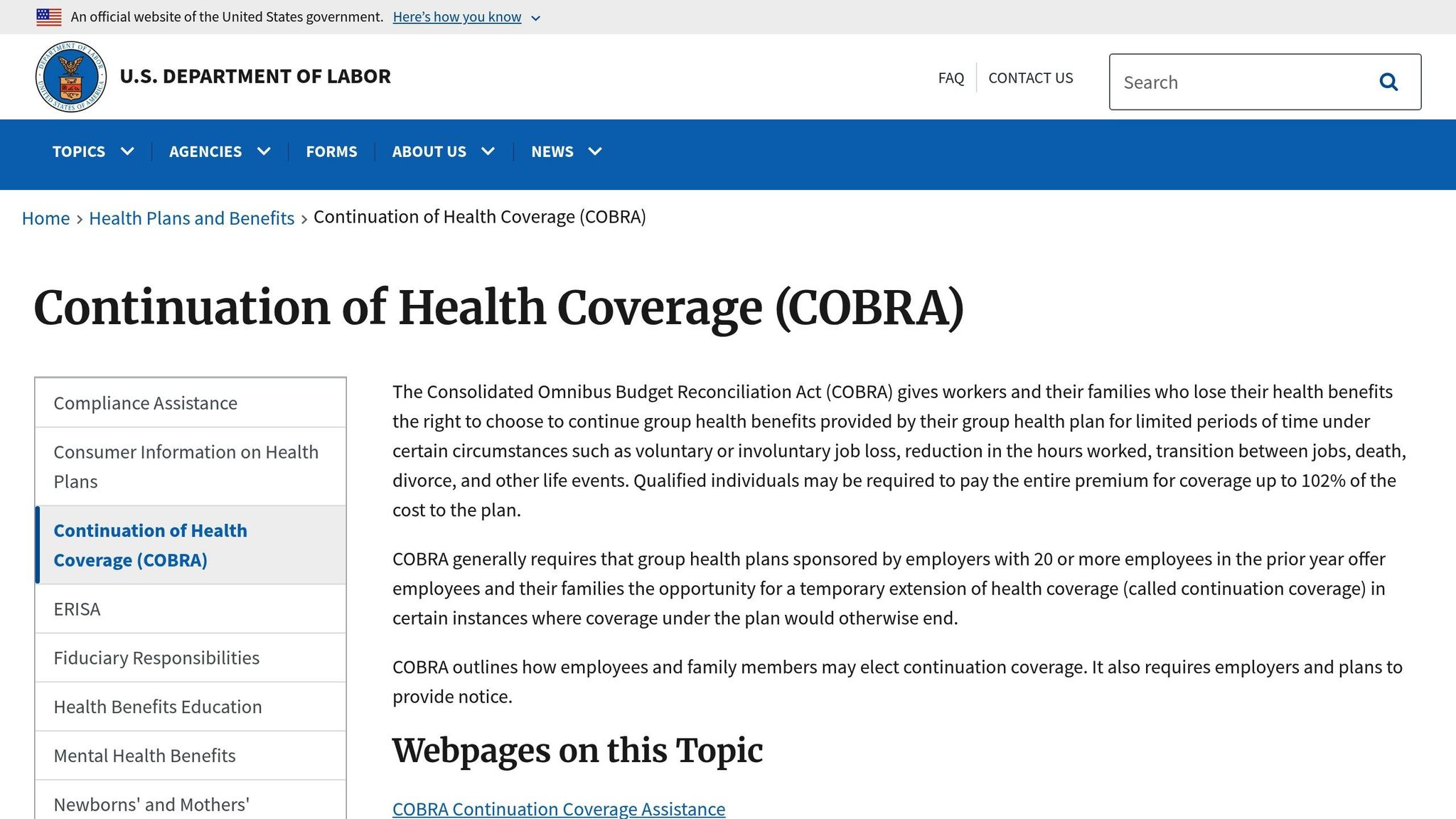
If you lose access to employer-sponsored health insurance, COBRA allows you to keep the same coverage. While it can be expensive, it might save money if you’ve already met your deductible or out-of-pocket maximum for the year.
2. Explore State Programs
Some states, including Illinois, offer Medicaid benefits or premium assistance programs. For example, the Health Insurance Premium Payment Program can cover COBRA premiums for eligible individuals.
3. Marketplace Subsidies
Four out of five individuals purchasing insurance via the marketplace qualify for financial assistance, with many paying less than $10 per month for premiums.
4. Hospital Charity Care
Nonprofit hospitals are required to offer financial assistance programs. Organizations like Dollar For can help you access these resources.
Navigating Insurance Denials and Appeals
Receiving a claim denial can feel frustrating, but you have the right to challenge the decision through an appeals process.
Step 1: Understand the Reason for Denial
Common reasons include:
- Administrative errors (e.g., incorrect billing codes).
- Claims labeled as "not medically necessary" or "experimental."
Step 2: File an Internal Appeal
Ask your insurer to reconsider their decision. Work with your healthcare provider to gather evidence supporting your appeal.
Step 3: Request an External Review
If the internal appeal fails, request an external review. This independent third-party review is binding, meaning the insurer must accept the outcome.
Why Appeal?
Studies show that 40-60% of appeals result in overturned denials. However, only 0.2% of denials are ever appealed. Don’t leave money on the table – use this vital tool.
Tracking Medical Bills and Staying Organized
The paperwork associated with health insurance can be overwhelming. Use these strategies to stay on top of your expenses:
- Check Explanation of Benefits (EOBs): Ensure the amounts match your medical bills before paying.
- Track Your Spending: Use tools like a medical bill tracker to monitor payments, deductibles, and out-of-pocket maximums.
- Negotiate with Providers: Ask for payment plans or discounted lump-sum payments when possible.
Key Takeaways
- Learn the Basics: Understand terms like premiums, deductibles, and out-of-pocket maximums to make informed decisions.
- Compare Plans Effectively: Evaluate total annual costs, including premiums and out-of-pocket expenses.
- Leverage Resources: Explore COBRA, Medicaid, and marketplace subsidies for affordable options.
- Utilize Appeals: If your insurance company denies a claim, appeal – it’s often successful.
- Stay Organized: Track expenses, EOBs, and deadlines to avoid overpaying or missing opportunities for assistance.
- Investigate Financial Aid: Nonprofit hospitals and state programs can provide significant support.
Understanding health insurance can transform the way you manage your healthcare expenses. By breaking down costs, comparing plans strategically, and utilizing available resources, you can secure comprehensive coverage tailored to your needs – without unnecessary financial strain. Take the time to educate yourself, and you’ll empower both your health and your wallet.
Source: "Navigating Insurance & Medical Bills with Cancer: Myeloma Patient Guide to Coverage, Costs & Appeals" – International Myeloma Foundation, YouTube, Jan 1, 1970 – https://www.youtube.com/watch?v=AOPVrjmruxw
Use: Embedded for reference. Brief quotes used for commentary/review.

Recent Comments